What Happens to Your Body During a Quantum RF Session? A Step-by-Step Walkthrough
- Dr. Mahalia Jackson
- October 14, 2026
- 10 min read
Quantum rf
Table of Contents
- 1. Why Knowing What to Expect Changes the Experience
- 2. What Quantum RF Actually Does to Tissue
- 3. Step 1: The Consultation and Treatment Planning
- 4. Step 2: Arriving for Your Session
- 5. Step 3: What Happens During the Treatment Itself
- 6. Step 4: What Your Body Does in the Hours After
- 7. Step 5: The Weeks That Follow
- 8. What the Physical Sensations Actually Feel Like
- 9. Common Misconceptions About the Quantum RF Experience
- 10. Frequently Asked Questions
- 11. Key Takeaways
1. Why Knowing What to Expect Changes the Experience
Most patients who walk into their first Quantum RF session feel some degree of uncertainty. Not anxiety about results, necessarily, but a genuine lack of information about what the appointment will actually feel like, how long it will take, what they will notice immediately after, and how that connects to the final outcome they are looking for.
That uncertainty is understandable. Non-surgical body contouring is a category that gets a lot of marketing attention but relatively little clear, procedural explanation. Most content focuses on results. Very little walks patients through the experience itself.
This guide fills that gap. What follows is a step-by-step account of what happens to your body during and after a Quantum RF session, what the science behind each phase actually is, and what you should be watching for at each stage.
Understanding the process does not just reduce pre-appointment nerves. It helps patients make better decisions about timing, preparation, and aftercare, all of which directly affect the outcome they see.
2. What Quantum RF Actually Does to Tissue
Before walking through the session itself, it helps to understand the mechanism you are working with.
Quantum RF is a radiofrequency-based body contouring system that delivers controlled thermal energy into subcutaneous fat and the overlying dermal tissue. RF energy, when passed through biological tissue, causes the water molecules within cells to oscillate rapidly, generating friction-based heat. That heat serves two purposes depending on the depth of delivery and the intensity applied.
At sufficient temperatures in the subcutaneous fat layer, typically in the range of 42 to 45 degrees Celsius, adipocyte cell membranes become disrupted, triggering a process called apoptosis, a controlled form of cell death. The fat cells that undergo apoptosis are then processed and cleared through the lymphatic system over the following weeks.
Simultaneously, the heat delivered to the dermal layer stimulates fibroblast activity, the cellular machinery responsible for producing collagen and elastin. This dual action of fat reduction and tissue tightening is what distinguishes Quantum RF from treatments that address only one or the other.
The system uses a monopolar or bipolar configuration depending on the area being treated, with applicators designed to deliver consistent energy across the surface while monitoring tissue temperature in real time. This feedback loop is what allows practitioners to achieve therapeutic temperatures safely and consistently throughout the session.
For a broader overview of the Quantum RF system and what it is designed to treat, visit https://medielite.org/service/quantum-rf-treatment/.
3. Step 1: The Consultation and Treatment Planning
Your Quantum RF experience begins before the day of your session. During your consultation, your provider will conduct a physical assessment of the area you want to address. They will evaluate tissue thickness, skin laxity, fat distribution, and any contraindications that might affect how the treatment is delivered.
This assessment shapes the treatment plan: which applicator to use, how many passes to make across the area, target temperature range, and session duration. It also sets expectations. A provider who tells you that Quantum RF will address modest localized fat with visible skin tightening is being accurate. A provider who promises dramatic liposuction-like fat removal is not.
Your consultation is also when you should share your full medical history, including any metal implants, pacemakers, or active skin conditions in the treatment area, all of which can affect candidacy. Patients who are pregnant, actively managing certain skin diseases in the target area, or who have significantly compromised immune function are not typically candidates.
4. Step 2: Arriving for Your Session
On the day of your appointment, you should arrive with clean skin in the treatment area. No lotions, oils, or self-tanner should be applied to the skin you are having treated, as these can interfere with energy delivery or cause uneven heating.
Wear comfortable, loose-fitting clothing that allows easy access to the treatment zone. If you are having a body area treated, like the abdomen, flanks, thighs, or arms, you will be provided with a drape or gown for the session.
Your provider or clinical staff will take baseline photographs of the treatment area before beginning. These are your reference point for evaluating results over the following weeks and months, and they are standard practice for any professional body contouring session.
A conductive gel is applied to the skin of the treatment area. This gel serves two functions: it allows the RF applicator to glide smoothly across the skin surface, and it facilitates efficient energy transfer between the device and the tissue beneath. The gel feels cool and slightly slippery. It does not cause any sensation on its own.
Unlike Morpheus8 or other RF microneedling treatments, Quantum RF does not require topical numbing cream for most body applications. There are no needles involved in the standard Quantum RF body protocol. Patients typically tolerate the treatment comfortably without anesthesia.
5. Step 3: What Happens During the Treatment Itself
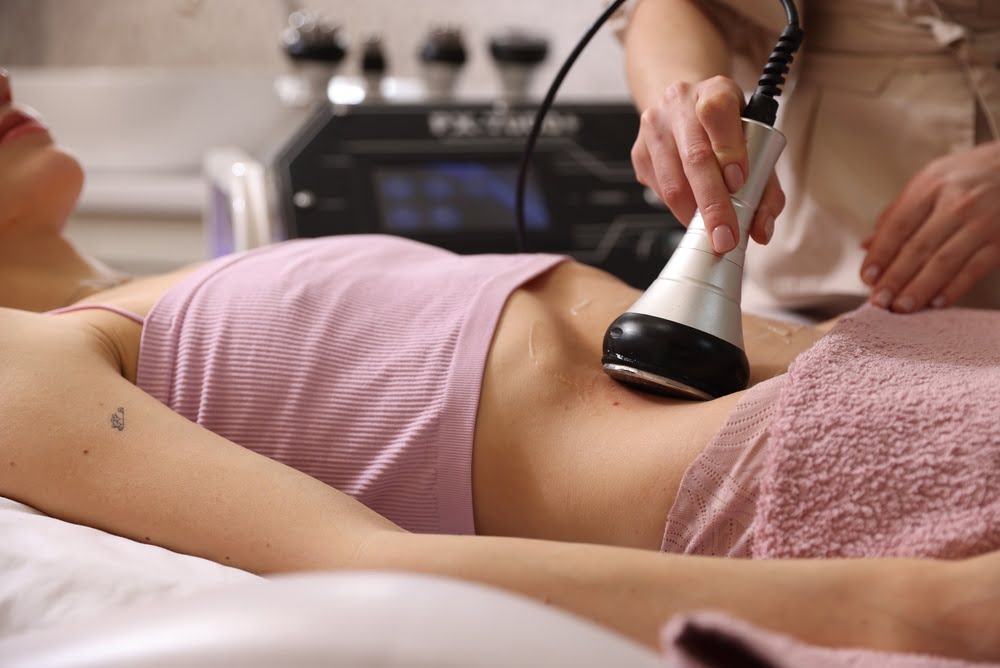
Once the gel is applied and the device is ready, your provider will begin moving the applicator over the treatment area in deliberate, overlapping patterns. The movement is intentional, not random. The passes are designed to deliver even coverage across the tissue and ensure that the target therapeutic temperature is reached and maintained consistently rather than in isolated spots.
The session is divided into phases:
Warming Phase
In the first several minutes of the session, the device gradually raises the temperature of the subcutaneous tissue to the therapeutic range. You will begin to feel warmth building in the area. The sensation is often described as similar to a hot stone massage, a deep, permeating heat that intensifies slightly with each pass but remains within comfortable limits for most patients.
The device monitors tissue temperature throughout, and your provider may ask you periodically how the heat feels. If a spot becomes too warm, the pass is adjusted. This is normal and expected; tissue temperature varies slightly across the surface due to differences in fat thickness, vascularity, and hydration.
Therapeutic Phase
Once the target temperature is reached, the goal shifts to maintaining it for the therapeutic window. This is where the adipocyte disruption and collagen stimulation actually occur. The applicator continues to move across the area, but the pace and pressure are adjusted to sustain the thermal effect without overheating the surface.
During this phase, you may notice that the warmth becomes more uniform and consistent. Some patients describe a feeling of tightness in the area as the tissue responds to the heat. This is normal and resolves on its own after the session.
For larger areas like the abdomen or thighs, the treatment zone may be divided into sub-sections, each brought through its own warming and therapeutic phase sequentially.
Cooling and Close
After the final pass is completed, the conductive gel is removed and the skin is wiped clean. Depending on the protocol, a cooling or soothing product may be applied to the surface to reduce any residual warmth and support the skin barrier. The area may appear slightly pink or feel warm to the touch, which is an expected post-treatment response.
Total session time varies by treatment area. A single body zone like the abdomen typically runs 30 to 45 minutes. Multiple zones in one session extend that time proportionally.
6. Step 4: What Your Body Does in the Hours After
The immediate post-treatment period is when most patients notice the first visible signs that something has happened. The skin in the treated area typically appears pink or lightly flushed, similar to a mild sunburn, and may feel warm and slightly tender to the touch.
Some swelling is common, particularly in areas with more subcutaneous fat, like the abdomen or inner thighs. This swelling is the result of increased circulation and localized inflammation in the tissue, both of which are part of the normal physiological response to therapeutic heat. This is not something to be concerned about; it is actually an indicator that the tissue has responded to treatment.
Most patients can return to normal daily activities immediately. There is no downtime requirement associated with Quantum RF body contouring in most cases. You can drive yourself home, go back to work, and continue your regular routine the same day.
What you should avoid in the first 24 hours includes hot showers or baths, saunas or steam rooms, vigorous exercise, and excessive sun exposure on the treated area. These activities increase circulation further, which can exacerbate temporary swelling and discomfort.
Staying well-hydrated supports the lymphatic clearance process that begins immediately after treatment. Some providers recommend light movement or walking in the days following a session to support lymphatic flow, which aids in the removal of treated fat cells.
7. Step 5: The Weeks That Follow
The most significant changes from a Quantum RF session do not appear immediately. The results develop gradually over six to twelve weeks as the biological processes set in motion during treatment complete their work.
Collagen synthesis peaks approximately four to six weeks after treatment and continues for months afterward. You will notice progressive improvements in skin firmness and texture as this remodeling occurs. Measurements and photographs taken at the six-week and twelve-week marks typically show more visible change than what you notice looking in the mirror daily.
Fat reduction through apoptosis follows a similarly gradual timeline. Disrupted fat cells are metabolized and cleared through the lymphatic system over the weeks following treatment. This process cannot be significantly accelerated, but it can be supported by maintaining adequate hydration, consistent cardiovascular activity, and a stable, healthy diet.
For patients undergoing a series of sessions, which is the typical recommendation for meaningful body contouring results, each session builds on the last. The collagen stimulated in the first session is reinforced by subsequent treatments, and the cumulative fat reduction is greater than what a single session produces.
Sessions are generally spaced four to six weeks apart, allowing the tissue sufficient time to respond between treatments. Most patients see their peak results approximately one to three months after their final session in a course of treatment.
8. What the Physical Sensations Actually Feel Like
One of the most common questions patients have before their first Quantum RF session is simply: does it hurt?
The honest answer is no, not in the way most people mean the word “hurt.” The treatment is thermal, and the sensation during the session is primarily heat. Here is how patients consistently describe it:
During the warming phase, most describe the sensation as a pleasant deep warmth, similar to the feeling of a hot stone placed on the skin or a warm compress held in place. It intensifies gradually and can become quite pronounced during the therapeutic phase, but rarely crosses the line from warm and intense to genuinely painful.
If a particular area becomes too hot, you tell your provider. The handpiece moves. The heat dissipates within seconds. Unlike treatments where energy is pulsed into tissue in discrete bursts, the continuous motion of the Quantum RF applicator means that localized heat buildup is addressed immediately.
After the session, the treated area feels warm and may feel slightly sore, similar to the muscle soreness after a workout. This typically resolves within 24 to 48 hours. In areas with more subcutaneous fat, a mild sense of pressure or fullness from swelling may persist for a few days.
The absence of needles, anesthesia, incisions, or recovery time is what makes Quantum RF a genuinely comfortable outpatient experience for the vast majority of patients.
9. Common Misconceptions About the Quantum RF Experience
Misconception 1: “The results appear right away.”
The initial flush and warmth after treatment can make the area appear temporarily different, but this is not the result itself. Meaningful contouring and tightening changes develop over weeks as collagen remodels and cleared fat cells are metabolized. Patients who evaluate the treatment based on how they look the next day are working from an incomplete picture.
Misconception 2: “It feels like electrocution or electrical shocks.”
RF energy is not the same as an electrical shock. It is a thermal technology. The sensation is heat, not a sudden sharp charge. Patients who associate the word “radiofrequency” with something electrically intense are almost always pleasantly surprised by how comfortable the actual session is.
Misconception 3: “More sessions means more heat, which means better results.”
More is not always more in this context. Sessions are spaced four to six weeks apart precisely because the tissue needs time to respond and remodel between treatments. Compressing sessions too close together does not produce faster results and can stress the tissue unnecessarily.
Misconception 4: “Quantum RF can replace diet and exercise.”
Quantum RF is a body contouring tool, not a weight loss treatment. It works best as a complement to a healthy lifestyle, targeting localized fat deposits and laxity that diet and exercise are not effectively addressing on their own. Patients who maintain a stable, healthy weight after their sessions hold their results significantly longer.
Misconception 5: “The treated fat cells come back.”
Fat cells that undergo apoptosis do not regenerate. However, the remaining fat cells in the area can still enlarge with weight gain. This is why lifestyle maintenance matters. The structural reduction achieved through Quantum RF is real, but it is not an exemption from the effects of significant weight change.
10. Frequently Asked Questions
Session length depends on the treatment area and the number of zones being addressed. A single body zone like the abdomen typically takes 30 to 45 minutes. If multiple areas are treated in one appointment, expect a proportionally longer session. Your provider will give you a specific time estimate during the consultation once your treatment plan is established.
Some patients notice early changes, particularly in skin texture and tightness, within the first two to four weeks after a single session. However, one treatment rarely produces the full extent of what Quantum RF can achieve. A course of two to four sessions is the standard recommendation for meaningful body contouring outcomes. Results continue to improve for up to three months after the final session.
Quantum RF is effective on the abdomen, flanks, inner and outer thighs, arms, buttocks, and submental area (under the chin). The treatment is adaptable to different body zones using applicators suited to the size and anatomy of each area. Your provider will confirm during the consultation which areas are appropriate candidates based on your anatomy and goals.
Light activity and walking are generally fine and can support lymphatic clearance of treated fat cells. Vigorous exercise is typically advised against for 24 hours after treatment to allow the initial post-treatment warmth and swelling to settle. After the first 24 hours, most patients return to their full exercise routine without restriction.
The primary distinction is mechanism and outcome. Cryolipolysis (CoolSculpting) uses cold to freeze and destroy fat cells. Quantum RF uses heat. Both achieve fat cell apoptosis through different thermal pathways. Quantum RF has the additional benefit of stimulating collagen and skin tightening simultaneously, which cryolipolysis does not.
Key Takeaways
- Quantum RF works through controlled thermal energy that disrupts fat cells and stimulates collagen in the dermis, producing both contouring and skin tightening effects in a single treatment.
- The session itself involves no needles, no anesthesia, and no incisions, making it a genuinely comfortable in-office procedure with no required downtime.
- The primary sensation during treatment is heat, described by most patients as similar to a deep warm compress or hot stone massage that intensifies during the therapeutic phase.
- Immediate post-treatment effects include temporary redness, warmth, and mild swelling that are all normal physiological responses and resolve within 24 to 72 hours.
- Results develop progressively over six to twelve weeks as fat cells are cleared through the lymphatic system and new collagen matures in the dermal layer.
- Sessions are spaced four to six weeks apart to allow the tissue adequate time to respond between treatments; a full course typically involves two to four sessions.
- Hydration, light activity, and a stable weight after treatment support results by facilitating lymphatic clearance and preventing enlargement of remaining fat cells.
What Happens During a Quantum RF Session?
Now that you know what to expect, the next step is experiencing it for yourself. Quantum RF body contouring is a comfortable, no-downtime treatment that works gradually and builds on itself with each session. Most patients notice meaningful changes in contour and skin firmness within six to twelve weeks of starting their course.
If you are ready to take that first step, a consultation is where your personalized treatment plan begins. Your provider will assess your target areas, set realistic expectations, and map out a session schedule built around your goals.
References
- InMode Quantum RF Technology Overview: https://www.inmode.com
- Cleveland Clinic, Radiofrequency Skin Tightening: https://my.clevelandclinic.org/health/treatments/24683-radio-frequency-rf-skin-tightening
- American Board of Cosmetic Surgery, Liposuction vs. Non-Invasive Fat Reduction: https://www.americanboardcosmeticsurgery.org/cosmetic-medicine/how-to-choose-between-liposuction-and-noninvasive-fat-reduction-procedures/
- Medi-Elite Quantum RF Service Page: https://medielite.org/service/quantum-rf-treatment/
- Medi-Elite Body Sculpting with Quantum RF: https://medielite.org/body-sculpting-with-quantum-rf-treatment/
- Medi-Elite Quantum RF Skin Tightening Bedford: https://medielite.org/quantum-rf-for-skin-tightening-in-bedford/
- Medi-Elite Non-Surgical Fat Reduction Bedford TX: https://medielite.org/non-surgical-fat-reduction-in-bedford-texas/