
Medi-Elite Health & Wellness

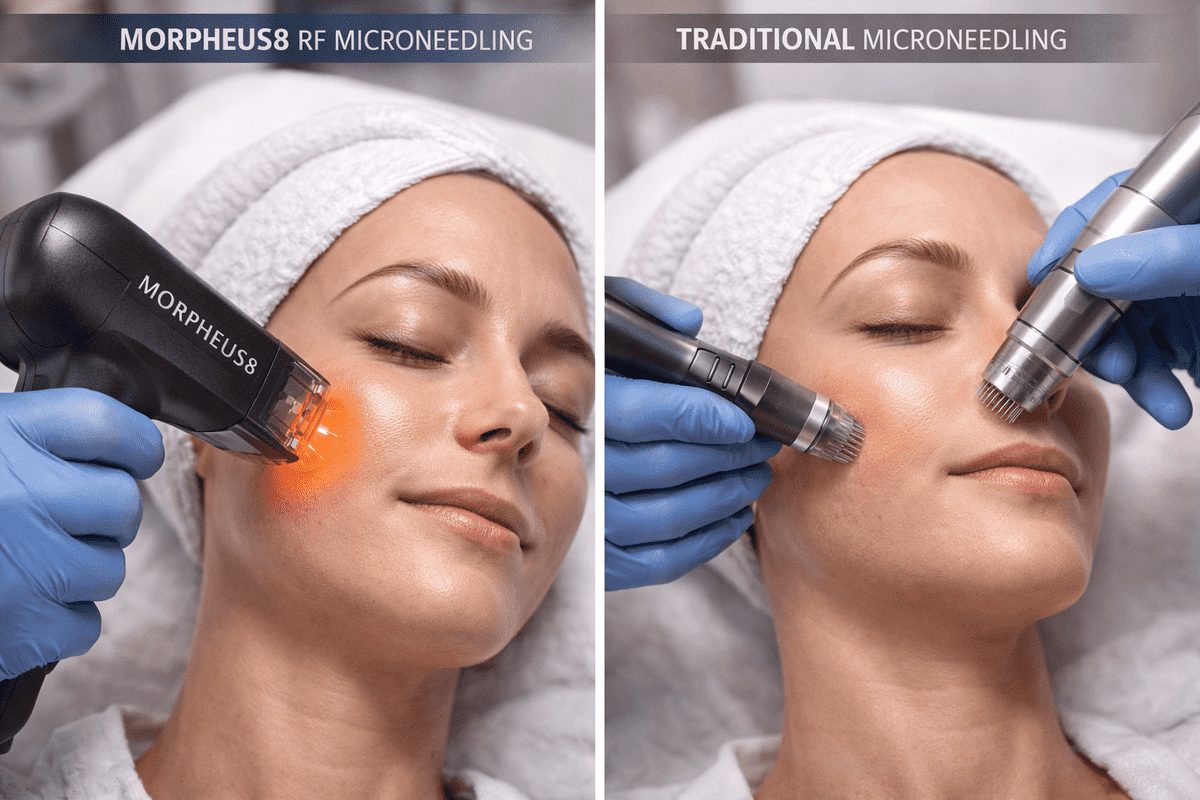
Side-by-side comparison of Morpheus8 RF microneedling vs microneedling treatment devices used on a patient's face

Morpheus8 vs. Traditional Microneedling: What Is the Real Difference?

You have probably heard of microneedling. You may also have come across Morpheus8 and found yourself wondering whether it is just a fancier, more expensive version of the same thing. When comparing RF microneedling vs microneedling, the difference goes well beyond price, it comes down to depth, technology, and what each treatment is physically capable of achieving.

Both treatments use tiny needles to stimulate your skin’s natural collagen response, but what Morpheus8 adds to that process fundamentally changes how deep the treatment reaches, what kind of results it can deliver, and which skin concerns it can realistically address.

This guide breaks down exactly how traditional microneedling and RF microneedling differ, who tends to benefit most from each, what each realistically costs, and the most common misconceptions patients have before choosing between them.

What Is Traditional Microneedling?

Traditional microneedling, often called collagen induction therapy, is a minimally invasive procedure that uses a device fitted with fine, sterile needles to create controlled micro-injuries across the surface of the skin. These tiny punctures trigger your body’s natural wound-healing process, which stimulates the production of collagen and elastin.

The result, over several weeks and sessions, is smoother skin texture, reduced appearance of fine lines, improved tone, and a reduction in the visibility of mild scars including some acne scarring.

According to the American Academy of Dermatology on microneedling, the procedure is most effective for improving skin texture, reducing fine lines, and minimizing the appearance of mild to moderate scarring.

Traditional microneedling is effective for:

  • Improving overall skin texture and tone
  • Reducing the appearance of fine lines
  • Minimizing enlarged pores
  • Addressing mild to moderate acne scarring
  • General skin rejuvenation with minimal downtime

The treatment works primarily at the upper layers of the skin, typically penetrating to a depth of one to two millimeters. A single traditional microneedling session generally ranges from $200 to $500 depending on the treatment area and provider. Because results are more gradual, four to six sessions are typically recommended, which means total investment can range from $800 to $3,000 or more depending on your plan.

What Is Morpheus8 and How Is It Different?

Morpheus8 is an advanced form of microneedling that incorporates radiofrequency (RF) energy into the process. During a Morpheus8 session, the device’s needles create the same controlled micro-injuries as standard microneedling, but they simultaneously deliver targeted RF heat energy into the deeper layers of the skin and the subcutaneous tissue below it.

This combination achieves two things that traditional microneedling alone cannot accomplish. First, the RF heat immediately contracts existing collagen fibers, producing a tightening effect that begins almost right away. Second, the thermal energy activates a deeper healing cascade, driving more significant and longer-lasting collagen remodeling in tissue layers that standard microneedling simply does not reach.

A peer-reviewed study on radiofrequency microneedling confirms that the addition of RF energy to microneedling produces measurably greater collagen remodeling at deeper tissue levels compared to mechanical microneedling alone.

Morpheus8’s needles can be adjusted to penetrate as deep as 7 to 8 millimeters, well into the dermis and the fat layer beneath it. Traditional microneedling reaches one to two millimeters. That depth difference is the core reason the two treatments produce different outcomes for different concerns. For a closer look at how InMode Morpheus8 stimulates collagen at the tissue level, that resource explains the science behind the process in plain language.

Morpheus8 sessions typically range from $800 to $1,500 per session depending on the treatment area and provider. Because results are more substantial and longer-lasting, most patients achieve their goals in one to three sessions, making the total investment comparable to or lower than a full course of traditional microneedling when evaluated over time.

Side-by-Side Comparison

FactorTraditional MicroneedlingMorpheus8 RF Microneedling
How It WorksFine needles create micro-injuries to trigger collagenMicro-needles + RF heat delivered deep into tissue simultaneously
Treatment Depth1–2 mm (upper skin layers)Up to 7–8 mm (deep dermis and subcutaneous tissue)
Collagen EffectGradual stimulation via wound-healing responseFaster, deeper stimulation + immediate collagen contraction from heat
Skin TighteningMild surface-level improvementSignificant tightening suitable for laxity, jowls, and neck
Best ForFine lines, enlarged pores, mild scars, surface textureDeeper wrinkles, skin laxity, acne scars, body contouring
Sessions NeededTypically 4–6 sessionsTypically 1–3 sessions
Cost Per Session$200–$500$800–$1,500
Downtime1–3 days redness and mild sensitivity1–3 days visible; up to 7 days full surface healing
Results DurationSeveral months; periodic maintenance neededUp to 1–2 years; results build over months
Skin Tone SafetyCaution needed for deeper skin tonesSafe and effective across all skin tones

The Key Differences in Plain Language

1. Treatment Depth

Traditional microneedling works at the surface and upper dermis. Morpheus8 reaches the deep dermis and the adipose tissue beneath it. This matters because skin looseness, sagging, and deeper structural changes originate in those lower layers. Surface treatments can improve texture and stimulate some collagen, but they cannot create the structural lift that comes from remodeling deeper tissue.


2. The Role of Radiofrequency Energy

Traditional microneedling relies entirely on the mechanical micro-injury to stimulate collagen. Morpheus8 adds thermal energy delivered directly into the tissue. The heat from the RF energy immediately contracts existing collagen fibers, an effect mechanical needling alone cannot produce. Over the weeks and months that follow, it also drives a deeper and more substantial collagen remodeling response that continues building long after the session is complete.


3. What Each Treatment Is Best Suited For

Traditional microneedling is a strong choice when:

  • Your primary concern is surface texture, tone, or mild scarring
  • You have fine lines but your skin is still relatively firm
  • You prefer a more gradual, lower-cost approach
  • You are focused on refinement rather than structural lifting

Morpheus8 is typically the better fit when:

  • You are dealing with visible skin looseness or sagging
  • You want to treat deeper wrinkles or more significant scarring
  • Fewer treatment sessions with more dramatic results is a priority
  • You want to treat areas beyond the face, including the neck, jawline, abdomen, or arms
  • You have a deeper skin tone and want a treatment safe for all skin types

Understanding the full range of benefits of Morpheus8 can help clarify whether it aligns with your specific skin goals before scheduling a consultation.


4. Sessions and Results Duration

Traditional microneedling typically requires four to six sessions to achieve meaningful results, with periodic maintenance treatments every few months. Morpheus8 typically requires one to three sessions to achieve comparable or more significant outcomes, and results continue developing for several months as collagen production peaks.


5. Downtime

Both treatments involve relatively minimal downtime compared to surgical options. Traditional microneedling typically produces one to three days of redness and mild sensitivity. Morpheus8 involves a similar visible recovery window, though patients with deeper treatment settings may experience a slightly longer normalization period. The deeper activity happening beneath the surface during Morpheus8 recovery is what drives more significant long-term results.


6. Skin Tone Suitability

Traditional microneedling carries some risk of post-inflammatory hyperpigmentation in patients with darker skin tones, particularly if the treatment is too aggressive. Morpheus8, developed by InMode, is designed to be safe across all skin tones because the RF energy works in the deeper layers where pigmentation risk is lower, bypassing the melanin-rich epidermis.

A Real-World Example

Consider two patients in their early 40s, each coming in with concerns about their skin.

The first has good overall firmness, some mild acne scarring from years past, and enlarged pores she wants to minimize. Her skin is relatively firm and healthy. Traditional microneedling would likely address her concerns effectively with a course of sessions.

The second has noticed increasing looseness along her jawline, early jowling, and deeper lines around her mouth. Her concern is not just texture. It is structural change that standard microneedling does not have the depth to address. Morpheus8 would be the more appropriate recommendation for her.

The right treatment depends entirely on the individual. A thorough consultation with your provider is the only way to know which approach genuinely fits your specific skin and goals.

Common Misconceptions About Microneedling and Morpheus8

Patients comparing these two treatments often carry a few assumptions that are worth addressing directly.

“Morpheus8 is just microneedling with a higher price tag.” This is the most common misconception. The addition of radiofrequency energy is not a cosmetic upgrade — it changes the physical mechanism of the treatment entirely, allowing it to reach tissue depths and produce structural changes that mechanical microneedling cannot achieve on its own.

“More sessions of traditional microneedling will eventually match Morpheus8 results.” For surface concerns like texture and mild lines, this can be true. For skin laxity, deeper wrinkles, and structural tightening, it is not. The depth limitation of standard microneedling means it is simply not accessing the tissue where those changes need to happen.

“Morpheus8 has significantly more downtime.” In practice, most patients experience one to three days of visible redness with both treatments. The difference in visible recovery is minor. The difference in what is happening beneath the surface during that recovery is significant.

“Traditional microneedling is unsafe for darker skin tones.” Traditional microneedling is not universally unsafe for darker skin, but it does require careful technique and appropriate settings to minimize pigmentation risk. Morpheus8 carries a lower inherent risk of post-inflammatory hyperpigmentation because it works below the epidermal melanin layer.

“One Morpheus8 session is enough for everyone.” Results depend on your skin concerns, baseline skin condition, and treatment goals. Some patients do well with a single session. Others benefit from a planned series. Your provider will assess your skin and recommend accordingly.

Frequently Asked Questions

Morpheus8 is a specific device within the broader category of RF microneedling treatments. It is made by InMode and is distinguished by its ability to reach deeper tissue layers than many competing devices, as well as its safety profile across all skin tones.

Both can address acne scarring, but the better choice depends on the depth and severity of the scars. Superficial scarring often responds well to traditional microneedling. Deeper or more textured scarring tends to respond better to Morpheus8 because of its ability to remodel tissue at a deeper level.

Most patients tolerate both treatments well, especially with a topical numbing cream applied beforehand. Because Morpheus8 penetrates deeper and uses thermal energy, some patients report slightly more sensation during the session, but discomfort is generally well managed with proper preparation.

Traditional microneedling typically requires four to six sessions for optimal results. Morpheus8 generally achieves comparable or better outcomes in one to three sessions. Your provider will recommend a specific plan based on your individual skin concerns and goals.

For patients dealing with skin laxity, deeper wrinkles, or concerns that go beyond surface texture, Morpheus8 typically delivers more significant results that last longer. When you factor in fewer sessions needed and longer-lasting outcomes, the total investment is often comparable to a full course of traditional microneedling.

Not Sure Which Treatment Is Right for Your Skin?

Traditional microneedling and Morpheus8 are both effective, well-established paths to better skin, but they are not interchangeable. Traditional microneedling is a strong option for surface-level concerns and patients whose skin is still relatively firm. Morpheus8 is the more appropriate tool when skin laxity, deeper structural changes, or more significant signs of aging are part of the picture.

The best way to know which treatment is right for your skin is a personalized consultation with a qualified provider who can evaluate your specific concerns and goals. Explore your Morpheus8 skin rejuvenation treatment options and schedule a consultation to get a clear, individualized recommendation. 

Disclaimer

This content is for informational purposes only and does not constitute medical advice. Individual results vary. Consult with a qualified healthcare provider before undergoing any aesthetic treatment.Â