
Medi-Elite Health & Wellness

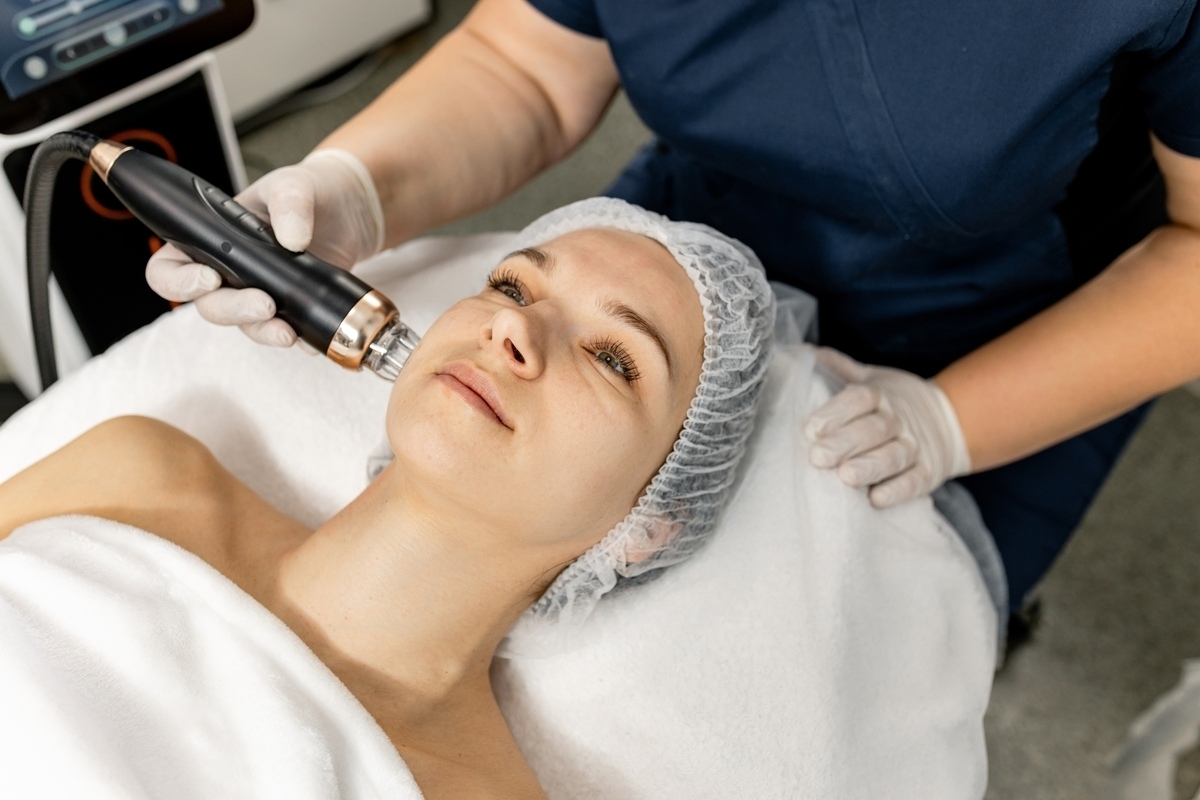
Provider applying a Quantum RF vs Morpheus8 radiofrequency handpiece to a patient's cheek during a non-surgical facial skin tightening treatment session

What Is the Difference Between Quantum RF and Morpheus8?

Quantum rf

Two of the most talked-about radiofrequency treatments in aesthetic medicine today are Quantum RF and Morpheus8. Patients researching non-surgical options frequently encounter both names and walk away unsure about which one addresses what.

Understanding Quantum RF vs Morpheus8 is not about deciding which is superior. It is about understanding what each treatment is built to do, how the technology differs at the tissue level, and which concerns each one is designed to resolve.

This guide covers how each technology works, what each treats most effectively, how they compare across key factors, and which scenarios call for one, the other, or both together.

1. How Quantum RF Works

Quantum RF treatment is a minimally invasive body contouring procedure developed by InMode. It uses bipolar radiofrequency energy delivered through a small probe inserted beneath the skin after local anesthesia is applied.

The probe sits in the subdermal layer, the tissue directly beneath the skin surface. It delivers controlled RF heat into localized fat deposits and the surrounding connective tissue.

The heat disrupts and dissolves fat cells in the targeted area. The body then clears those cells through its natural metabolic process over the weeks following treatment.

At the same time, the RF energy contracts existing collagen fibers immediately and triggers new collagen production that builds over the following two to four months.

The defining characteristics of Quantum RF are:

  • Subdermal delivery — the probe works beneath the skin surface, not on top of it
  • Dual action — fat reduction and skin tightening occur in a single procedure
  • Localized precision — RF energy is directed exactly where the probe is positioned
  • Minimally invasive — requires a tiny entry point under local anesthesia only

According to a peer-reviewed clinical study on radiofrequency body contouring, subdermal RF energy delivery allows precise targeting of adipose tissue while simultaneously contracting the overlying skin, producing outcomes that surface-level treatments cannot replicate.

2. How Morpheus8 Works

Morpheus8 is a fractional radiofrequency microneedling device, also developed by InMode. It delivers RF energy into the skin through a matrix of tiny insulated needles.

During treatment, the needles penetrate to a controlled depth in the dermis and subdermis. RF energy is released at that depth to heat the tissue and stimulate a collagen remodeling response.

The fractional delivery pattern treats a defined grid of micro-zones across the skin surface. Surrounding tissue between each point is left intact, which accelerates healing and drives collagen and elastin production over time.

The defining characteristics of Morpheus8 are:

  • Needle-based delivery — insulated microneedles penetrate to a programmable depth
  • Fractional pattern — treats a grid of micro-zones rather than the full surface
  • Primary action on skin quality — tightening, texture refinement, scar remodeling, pore reduction
  • Customizable depth — needle penetration can be adjusted to target different tissue layers

According to the American Academy of Dermatology, radiofrequency skin tightening procedures work by heating the tissue beneath the skin to stimulate collagen production, with most patients seeing progressive tightening as new collagen develops over several months.

3. Quantum RF vs Morpheus8: The Core Difference

The most important distinction between Quantum RF vs Morpheus8 is the layer of tissue each treatment is designed to address and the mechanism used to reach it.

Quantum RF is a subdermal body contouring treatment. Its probe works beneath the skin in the fat and connective tissue layer. Its primary purpose is to reduce localized fat deposits and tighten the overlying skin simultaneously.

Morpheus8 is a dermal and subdermal skin remodeling treatment. Its microneedles penetrate from the skin surface to a programmed depth in the dermis or subdermis. Its primary purpose is to improve skin quality — tightening, texture, tone, scar appearance, and pore refinement. It does not address fat reduction.

FactorQuantum RFMorpheus8
Delivery MethodSubdermal probe inserted beneath skinMicroneedles penetrating from skin surface
Primary Tissue TargetSubdermal fat and connective tissueDermis and upper subdermis
Fat ReductionYesNo
Skin TighteningYesYes
Skin Texture and QualitySecondary benefitPrimary purpose
Scar RemodelingNoYes
Anesthesia RequiredLocal anesthesiaTopical numbing cream
InvasivenessMinimally invasiveMinimally invasive
Entry MethodTiny probe entry pointSurface needle penetration

The clearest way to frame this: Quantum RF works from the inside out. Morpheus8 works from the outside in. Both use radiofrequency energy to stimulate collagen, but they target different tissue layers for different primary purposes.

4. What Each Treatment Is Best Used For

Quantum RF Is the Better Fit When:
  • The primary concern is a localized fat deposit that has not responded to diet and exercise, such as the lower abdomen, flanks, inner thighs, or submental area
  • The patient has mild to moderate skin laxity alongside the fat concern and wants both addressed in one procedure
  • The patient wants body contouring with more precision than non-invasive surface treatments can provide
  • Subdermal fat is the dominant concern in the treatment area
Morpheus8 Is the Better Fit When:
  • The primary concern is skin quality — fine lines, crepey texture, acne scarring, enlarged pores, stretch marks, or uneven tone
  • Fat reduction is not part of the treatment goal and the focus is entirely on skin improvement
  • Facial rejuvenation is the goal, including skin quality across the cheeks, forehead, neck, and periorbital area
  • The patient has darker skin tones and needs a treatment with a well-established safety profile across all skin types

For a closer look at the range of concerns Quantum RF addresses at the body level, the overview of Quantum RF for body contouring and what it treats provides additional clinical context.

5. Treatment Areas Compared

Both treatments can address the face and body, but their overlap and differences by area are worth understanding clearly.

Body Areas

Quantum RF body areas:

  • Abdomen and lower abdomen
  • Flanks and love handles
  • Inner and outer thighs
  • Upper arms
  • Back and bra line
  • Submental area beneath the chin

Morpheus8 body areas:

  • Abdomen (skin quality and mild tightening)
  • Inner arms
  • Inner thighs
  • Décolletage and neck
  • Areas with stretch marks or scarring
Face and Neck

Both treatments are used on the face and neck, but for different purposes.

Quantum RF on the face focuses on lifting the lower face and jawline by addressing submental and jowl-area fat alongside tissue tightening.

Morpheus8 on the face focuses on overall skin quality — addressing fine lines, texture irregularities, pore size, and generalized laxity across the cheeks, forehead, and periorbital areas.

According to Cleveland Clinic’s clinical overview of RF microneedling, RF microneedling delivers RF energy at precise tissue depths to stimulate collagen fiber growth, producing progressive improvement in skin wrinkling, scarring, and laxity with minimal downtime for most patients.

6. Recovery and Downtime

Quantum RF Recovery

Most patients experience mild soreness and slight swelling for one to three days following a session. Minor bruising at the entry point is possible and typically resolves within several days.

The majority of patients return to normal daily activities the same day or the day after treatment.

What to expect in the days following Quantum RF:

  • Mild soreness and warmth in the treated area
  • Minor swelling that begins to settle within 48 hours
  • Possible light bruising at the entry point
  • Normal activity typically resumed within one to two days
Morpheus8 Recovery

Morpheus8 recovery is typically characterized by redness, mild swelling, and pinpoint marks across the treated area in the 24 to 72 hours following treatment.

Most patients describe the skin as feeling warm and appearing flushed, similar to a moderate sunburn. The skin surface generally normalizes within two to five days.

What to expect in the days following Morpheus8:

  • Redness and mild swelling across the treatment zone
  • Pinpoint marks from the needle matrix that resolve within days
  • Skin feels dry or slightly rough as surface healing progresses
  • Normal activities typically resumed within one to three days

7. Skin Type Considerations

Both Quantum RF and Morpheus8 have well-documented safety profiles across a range of skin tones and types. This makes them preferred options for patients who may not be suitable candidates for ablative laser treatments.

Quantum RF delivers RF energy beneath the skin surface rather than through it. This significantly reduces the risk of surface-level pigmentation changes, including post-inflammatory hyperpigmentation that can affect patients with medium to deeper skin tones.

Morpheus8 uses insulated microneedles that concentrate RF energy at the needle tip beneath the skin surface rather than on the epidermal layer. This design reduces the risk of surface thermal injury.

Both treatments are considered appropriate across Fitzpatrick skin types I through VI when administered by an experienced provider with appropriate settings.

8. Can Quantum RF and Morpheus8 Be Combined?

Yes. In many clinical situations the two treatments address genuinely separate concerns present in the same patient simultaneously.

A patient with localized fat deposits on the abdomen alongside skin texture concerns presents two distinct tissue-layer problems. Quantum RF addresses the subdermal fat and produces structural tightening. Morpheus8 addresses the surface skin quality that Quantum RF alone does not resolve at the same level.

Common combination scenarios:

  • Quantum RF for body contouring on the abdomen or flanks, followed by Morpheus8 to address skin texture and surface laxity in the same area
  • Quantum RF for submental fat and lower face tightening, with Morpheus8 for broader facial skin quality improvement across the cheeks and forehead
  • Sequential treatments spaced appropriately to allow each area to heal fully before the next phase

The sequence and spacing of combination treatments should always be guided by a qualified provider who can assess tissue state between sessions.

9. Frequently Asked Questions

Both treatments are performed with anesthesia. Quantum RF uses local anesthesia injected into the treatment area. Morpheus8 uses a topical numbing cream applied before the procedure.

Most patients describe Quantum RF as comfortable during the procedure with mild soreness afterward. Morpheus8 is typically described as a heat and pressure sensation with surface sensitivity in the days following. Neither is significantly painful when performed with proper numbing.

Both produce results that develop over time as new collagen forms.

Initial changes from Quantum RF may be visible within a few weeks as swelling resolves, with full contouring results developing over two to four months. Morpheus8 skin quality improvements are typically visible within four to six weeks, with progressive refinement continuing for up to three to six months.

For Quantum RF, most patients achieve their contouring goal in one to three sessions depending on the treatment area and fat volume being addressed.

For Morpheus8, a series of two to four sessions spaced four to six weeks apart is the standard recommendation for most skin quality concerns, though this varies based on condition severity.

No. Morpheus8 is not a fat reduction treatment. Its needles penetrate to the dermal and subdermal layers to stimulate collagen and remodel skin quality.

While some providers use Morpheus8 Body at depths that reach the superficial fat layer for very small areas, it is not designed for meaningful fat reduction. Patients with fat reduction as a primary concern should not substitute Morpheus8 for Quantum RF.

The answer depends entirely on the primary concern. If localized fat reduction with simultaneous skin tightening is the goal, Quantum RF is the appropriate tool. If improving skin texture, tone, scarring, or generalized laxity is the goal, Morpheus8 is the more suitable option.

Many patients are good candidates for both, addressed in a planned sequence. For patients exploring their non-surgical body contouring options in the area, a consultation is the recommended starting point.

10. Which Treatment Is Right for You?

The most accurate answer comes from a thorough assessment with a qualified provider who can evaluate the tissue and align treatment goals with what each approach can realistically deliver.

If the concerns described in this guide point clearly toward one treatment, a consultation will confirm it. If concerns span both categories, a planned combination approach may be the most clinically appropriate path forward.

Read more about who is a good candidate for Quantum RF body contouring to continue building your understanding before a consultation.

Key Takeaways

  • Quantum RF and Morpheus8 both use radiofrequency energy to stimulate collagen, but they target different tissue layers for different clinical purposes.
  • Quantum RF works from beneath the skin to reduce localized fat deposits and simultaneously tighten the overlying tissue. It is a body contouring treatment.
  • Morpheus8 works from the skin surface inward to remodel skin quality, improve texture, address scarring, and refine tone. It is a skin treatment.
  • Neither treatment is a substitute for the other.
  • The right choice depends on whether fat reduction, skin quality improvement, or both are the primary concern.
  • A qualified provider is the appropriate person to make that determination based on a direct assessment of the individual patient.

Find Out Whether Quantum RF or Morpheus8 Is Right for You.

The most accurate answer comes from a face-to-face assessment with a qualified provider who can evaluate your tissue, review your health history, and align your goals with what each treatment can realistically deliver.

Disclaimer:This content is for informational purposes only and does not constitute medical advice. Individual results vary. Consult with a qualified healthcare provider before undergoing any aesthetic treatment.