Medi-Elite Health & Wellness

Many patients who have reached their goal weight find that skin laxity in the abdomen does not fully resolve on its own. Morpheus8 skin tightening after weight loss addresses mild to moderate laxity by stimulating new collagen production at the dermal depth where the structural change occurred.

Can Morpheus8 Tighten Skin After Weight Loss?

Quantum rf

Losing a significant amount of weight is a real achievement. But for many patients, the reward comes with an unwelcome companion: loose, sagging skin that does not snap back on its own after the weight is gone. Whether the weight loss came from sustained lifestyle changes, medication support, or bariatric surgery, the skin’s response is often the same, and it is one of the most common concerns patients bring into aesthetic consultations in the months and years that follow.

Morpheus8 skin tightening after weight loss is a well-established application of RF microneedling technology, and it addresses a genuine clinical need. This guide explains how it works for this specific concern, what results are realistic, which patients are the strongest candidates, and what expectations are appropriate before you begin.

1. Why Weight Loss Causes Loose Skin and Why It Is Hard to Treat

During weight gain, the skin stretches to accommodate the increased volume of fat beneath it. Over time, the collagen and elastin fibers in the dermis become stretched, damaged, and disorganized. When weight is lost, the fat volume beneath the skin reduces, but the stretched skin does not always retract fully.

The degree of skin retraction after weight loss depends on several factors:

  • The amount of weight lost. Larger volume losses leave more stretched skin behind.
  • The speed of weight loss. Rapid loss gives skin less time to gradually retract compared to slow, sustained loss.
  • Patient age. Younger skin with higher collagen density retracts more readily than older skin with reduced collagen production capacity.
  • The duration of weight gain. Skin that has been stretched for many years has more significant structural changes than skin stretched for a shorter period.
  • Genetics. Some patients are predisposed to retract more effectively than others regardless of other factors.

The result in many patients is skin that hangs or sags in areas where the underlying fat volume has been reduced. Creams, topical treatments, and exercise cannot restore the structural collagen that has been lost or disorganized. Effective treatment must work at the dermal depth where that structural change occurred.

2. How Morpheus8 Skin Tightening After Weight Loss Works

InMode Morpheus8 skin treatments penetrate the skin with a microneedle array to depths of up to seven to eight millimeters, delivering RF energy into the mid to deep dermis and the subdermal tissue below it. For post-weight-loss skin, this depth of penetration matters significantly.

The RF energy triggers two responses that directly address the structural changes caused by weight gain and loss:

First: Immediate collagen contraction. The thermal energy causes existing collagen fibers to contract and shorten. This produces a visible initial tightening effect that patients often notice even before swelling from the session fully resolves.

Second: Neocollagenesis over three to six months. The controlled thermal injury activates fibroblasts, which begin producing new collagen and elastin. This new structural protein gradually fills in the areas of collagen deficit, improving the thickness, density, and firmness of the dermis over the months following each session.

What this means for post-weight-loss skin specifically: Morpheus8 is rebuilding the structural protein network that was disrupted during years of weight gain and stretching. It is doing so at the tissue depth where the problem originated, which is why it produces more meaningful results than surface treatments that cannot reach the dermis.

A published clinical study on RF microneedling for skin laxity confirms that fractional RF microneedling produces statistically significant improvement in skin laxity scores and dermal thickness by stimulating organized collagen production at the dermal depth, making it a well-supported option for patients with structural skin quality changes.

3. Which Areas Respond Best After Weight Loss

Post-weight-loss skin laxity appears in different patterns depending on where the patient carried their weight. Morpheus8 performs differently in different anatomical zones, and understanding this helps set expectations before treatment begins.

Abdomen

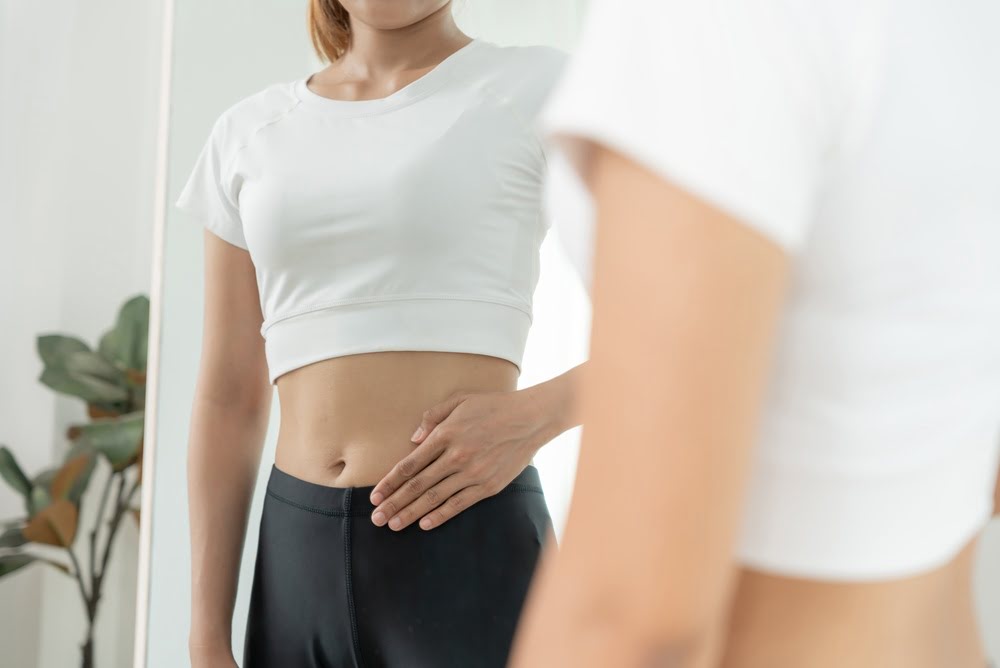
The abdomen is one of the most common and most requested treatment areas after weight loss. Mild to moderate abdominal skin laxity, where the skin feels loose or shows some drooping without significant folding or hanging, responds well to Morpheus8. The device’s ability to reach subdermal tissue at depth makes it effective for improving both skin firmness and texture in this area.

Important caveat: patients with a pannus, a significant overhang of abdominal skin that folds over the waistband, have a degree of skin redundancy that Morpheus8 cannot resolve through tightening alone. This level of excess requires surgical intervention.

Upper Arms

Loose skin on the upper arms is a very common post-weight-loss concern. For mild to moderate upper arm laxity without a large amount of hanging skin, Morpheus8 produces meaningful firming and texture improvement. Patients with significant skin redundancy on the upper arms, sometimes described as a pronounced batwing appearance with true hanging skin, are better candidates for surgical brachioplasty than for Morpheus8 alone.

Inner Thighs

The inner thigh area often experiences significant skin quality changes after weight loss. Morpheus8 addresses the laxity and crepey texture common in this zone effectively, improving both firmness and overall skin quality over the course of a treatment series.

Face and Neck

Weight loss can accelerate the appearance of facial aging by reducing the volume of subcutaneous fat that previously plumped the skin. The result is often a hollowed appearance combined with increased skin laxity, particularly in the cheeks, jawline, and neck. Morpheus8 is particularly effective in the lower face and neck after weight loss because it addresses the structural laxity at depth without the risk of further volume loss that some laser treatments carry.

Outer Thighs and Buttocks

Post-weight-loss laxity in the outer thigh and buttock area can also be addressed with Morpheus8. The treatment improves skin texture and firmness, though patients with significant skin redundancy in this area may need a combined approach.

For a complete overview of all Morpheus8 treatment areas across the body and how providers calibrate settings for each zone, that resource covers the full range of anatomical applications and what to expect in each.

4. How Much Improvement Is Realistic: Setting Honest Expectations

This is the section that matters most for patients who have just achieved significant weight loss and are excited about the possibility of addressing their loose skin. Being direct about realistic outcomes prevents disappointment and helps patients choose the most appropriate treatment path.

Morpheus8 skin tightening after weight loss produces:

  • Meaningful improvement in skin firmness and texture in areas with mild to moderate laxity
  • A visible reduction in the loose, crepey quality of skin that commonly develops after significant weight loss
  • Progressive improvement over three to six months per session as collagen production builds
  • Longer-lasting results in patients who maintain their weight and follow collagen-supporting lifestyle habits

Morpheus8 skin tightening after weight loss does not produce:

  • Removal of true excess skin with significant redundancy or hanging
  • Results equivalent to a surgical lift or skin excision procedure in patients with severe laxity
  • Immediate visible tightening within the first week without any wait for collagen development

The most satisfied Morpheus8 patients after weight loss are those who have mild to moderate laxity without significant excess skin, who have realistic expectations about gradual improvement, and whose weight has been stable for at least three to six months before beginning treatment.

5. Who Is the Right Candidate for Morpheus8 After Weight Loss

The candidacy profile for Morpheus8 after weight loss is specific, and knowing whether you fall within it saves significant time and investment.

Strong candidates:

  • Patients who have completed their weight loss journey and maintained a stable weight for at least three to six months
  • Patients with mild to moderate skin laxity in specific areas, where the skin is loose but not significantly redundant
  • Patients who are in good overall health without active skin conditions in the treatment area
  • Patients who are not pregnant or breastfeeding
  • Patients with realistic expectations about gradual improvement over three to six months

Patients who may be better served by surgery:

  • Patients with a significant pannus or abdominal skin overhang
  • Patients with pronounced upper arm skin hanging that significantly affects daily comfort or function
  • Patients who have lost an extremely large amount of weight (150 pounds or more) and have widespread, severe skin redundancy in multiple body zones
  • Patients who want dramatic, single-procedure transformation rather than gradual improvement

A consultation with a qualified provider who can assess the degree of your skin laxity in person is the most reliable way to determine which category your skin falls into and which approach is genuinely appropriate.

6. How Many Sessions Are Needed for Post-Weight-Loss Skin

Post-weight-loss skin typically requires more sessions than other Morpheus8 indications because the structural collagen deficit is more extensive. Most providers recommend three to four sessions spaced four to six weeks apart as the standard treatment course for meaningful post-weight-loss skin improvement.

Patients with more significant laxity, larger treatment areas, or older skin with reduced baseline collagen production may benefit from additional sessions beyond the standard course. The treatment areas involved also affect session count, as treating multiple zones such as the abdomen, arms, and thighs simultaneously requires session planning that accounts for the total treatment load across all skin areas.

Results continue developing over three to six months after the final session. The full benefit of a complete treatment course is typically visible at the five to six month mark following the last session, when collagen production from all sessions has reached its cumulative peak.

7. Morpheus8 vs Surgical Skin Removal After Weight Loss

The comparison between Morpheus8 and surgical skin removal procedures is one of the most important conversations to have clearly before beginning any treatment.

FactorMorpheus8Surgical Skin Removal
MechanismCollagen stimulation tightens and improves existing skinPhysically excises redundant skin
Best ForMild to moderate laxity, skin quality improvementSignificant skin redundancy, large excess skin folds
AnesthesiaLocal or topical onlyGeneral anesthesia typically required
Downtime2 to 5 days2 to 6 weeks depending on procedure
ScarringMinimal, discreet entry pointsPermanent surgical scars at excision sites
ResultsGradual improvement over 3 to 6 monthsVisible once surgical swelling resolves
SessionsTypically 3 to 4Single surgical procedure
Skin QualitySimultaneously improves texture and firmnessRemoves skin without improving remaining skin quality
Cost Range$3,000 to $6,000 for full course$5,000 to $20,000+ depending on areas

The honest summary: for patients with mild to moderate post-weight-loss laxity, Morpheus8 frequently produces results they find fully satisfying without surgical intervention. For patients with significant skin redundancy, Morpheus8 improves what is there but cannot address the structural excess that surgery removes. Some patients benefit from both: Morpheus8 to improve skin quality and mild laxity before or after surgery.

8. Common Misconceptions About Morpheus8 for Loose Post-Weight-Loss Skin

“Morpheus8 can get rid of any loose skin after weight loss.” Morpheus8 improves mild to moderate laxity effectively. Significant skin redundancy where skin is hanging, folding, or causing discomfort requires surgical removal. The right treatment depends entirely on the degree of your specific skin changes.

“I need to wait until I have maintained my weight for a full year.” While a stable weight is important, the standard recommendation is three to six months of weight stability before beginning Morpheus8 treatment. A year is not required, but the weight must be stable, not still actively changing.

“Results will be visible immediately.” Morpheus8 tightening results develop over months, not days. Some initial firmness from immediate collagen contraction is visible early, but the most meaningful improvement from the collagen-building process takes three to six months to reach its peak. Evaluating results at two to four weeks is premature.

“My loose skin will go back to normal on its own if I give it more time.” Post-weight-loss skin that has not retracted after six months of stable weight is unlikely to retract significantly with additional waiting. The structural collagen changes that cause persistent laxity do not self-correct over time without active treatment.

9. Frequently Asked Questions

Most providers recommend waiting until your weight has been stable for at least three to six months before beginning Morpheus8 treatment. This ensures that your skin has finished its natural retraction process and that the results of your treatment will be durable rather than shifting as your body composition continues to change.

Yes. Many patients who have undergone bariatric surgery and achieved significant weight loss find Morpheus8 effective for addressing mild to moderate skin laxity in the abdomen, arms, thighs, and face. Patients with significant skin redundancy from very large weight losses may need a combination of Morpheus8 and surgical procedures to achieve their goals.

Morpheus8 can improve longstanding skin laxity, but very old, extensively stretched skin with a significantly depleted collagen foundation may respond more slowly and less completely than more recently loosened skin. A provider assessment will give you a realistic picture of what your specific skin’s response is likely to look like.

Yes. Some patients pursue Morpheus8 as part of a broader aesthetic and wellness plan that includes medical weight loss support. Discuss your full treatment goals with your provider so they can recommend the right sequencing. For context on available weight management support alongside aesthetic treatment, exploring non-surgical body contouring options at your provider gives you a full picture of what can be addressed together.

Maintaining your weight, supporting collagen production through nutrition (especially protein and vitamin C), staying hydrated, using daily SPF, and scheduling periodic maintenance sessions every six to twelve months are the most effective strategies for long-term results. For the complete approach, the resource on maximizing your Morpheus8 results covers the full lifestyle and skincare framework.

10. Is Morpheus8 the Right Next Step for Your Skin?

For patients who have worked hard to reach their weight loss goals and are now dealing with skin that has not caught up, Morpheus8 skin tightening after weight loss offers a well-supported, non-surgical path to meaningful improvement. The key is accurate assessment of your laxity degree, realistic expectations about gradual results, and a stable starting weight.

Schedule a consultation with a qualified provider to have your skin assessed and receive an honest recommendation on whether Morpheus8, a surgical approach, or a combination is the most appropriate path for your specific skin after weight loss.

Key Takeaways

  • Morpheus8 skin tightening after weight loss is most effective for patients with mild to moderate skin laxity in areas where the skin has lost elasticity but has not developed significant excess hanging skin.
  • The best results come from patients who have reached a stable goal weight before beginning treatment. Treating skin that is still changing with ongoing weight loss reduces the durability of outcomes.
  • Morpheus8 works by stimulating new collagen and elastin production in the areas where these proteins have been lost or stretched during weight gain and the subsequent weight loss process.
  • Areas that respond well include the abdomen, inner thighs, upper arms, and face and neck, where mild to moderate post-weight-loss laxity is common and the tissue depth is appropriate for RF penetration.
  • Significant excess skin with true redundancy requires surgical removal. Morpheus8 tightens and improves skin quality but cannot remove large folds of excess skin.
  • Most patients need three to four sessions for meaningful post-weight-loss skin improvement, with results developing over three to six months per session.
  • Combining Morpheus8 with lifestyle habits that support collagen health significantly extends and strengthens the skin tightening results over the long term.

Want to Know If Morpheus8 Can Help With Your Skin After Weight Loss?

Post-weight-loss skin is one of the most nuanced aesthetic concerns, and the right treatment depends on the degree of your specific laxity. Schedule a consultation with a qualified provider to have your skin assessed in person and receive an honest, personalized recommendation on whether Morpheus8, surgery, or a combination approach is the most appropriate path for your goals.

Disclaimer: This content is for informational purposes only and does not constitute medical advice. Individual results vary. Consult with a qualified healthcare provider before undergoing any aesthetic treatment.